
Doctoral student in Biology with a focus on Molecular Microbiology - Hiring in process/Finished, not possible to apply
This advert is not available!
Lund University, 009999 Lund University, 150000 NAT
Lund University was founded in 1666 and is repeatedly ranked among the world’s top universities. The University has around 47 000 students and more than 8 800 staff based in Lund, Helsingborg and Malmö. We are united in our efforts to understand, explain and improve our world and the human condition.
Lund University welcomes applicants with diverse backgrounds and experiences. We regard gender equality and diversity as a strength and an asset.
Subject description
Biology is a broad subject about all living things. It encompasses everything from processes at the molecular and cellular level to global processes at ecosystem level. The subject is divided into a range of sub-disciplines and specializations. The PhD program at the Department of Biology includes many of these specializations, from molecular biology to applied ecology, from viruses and individual cells to evolutionary biology and global biodiversity. Taking on research studies at the Department of Biology generally means focusing on a delimited part of the research area of biology and may include field studies, experiments, theoretical studies, or a combination of these.
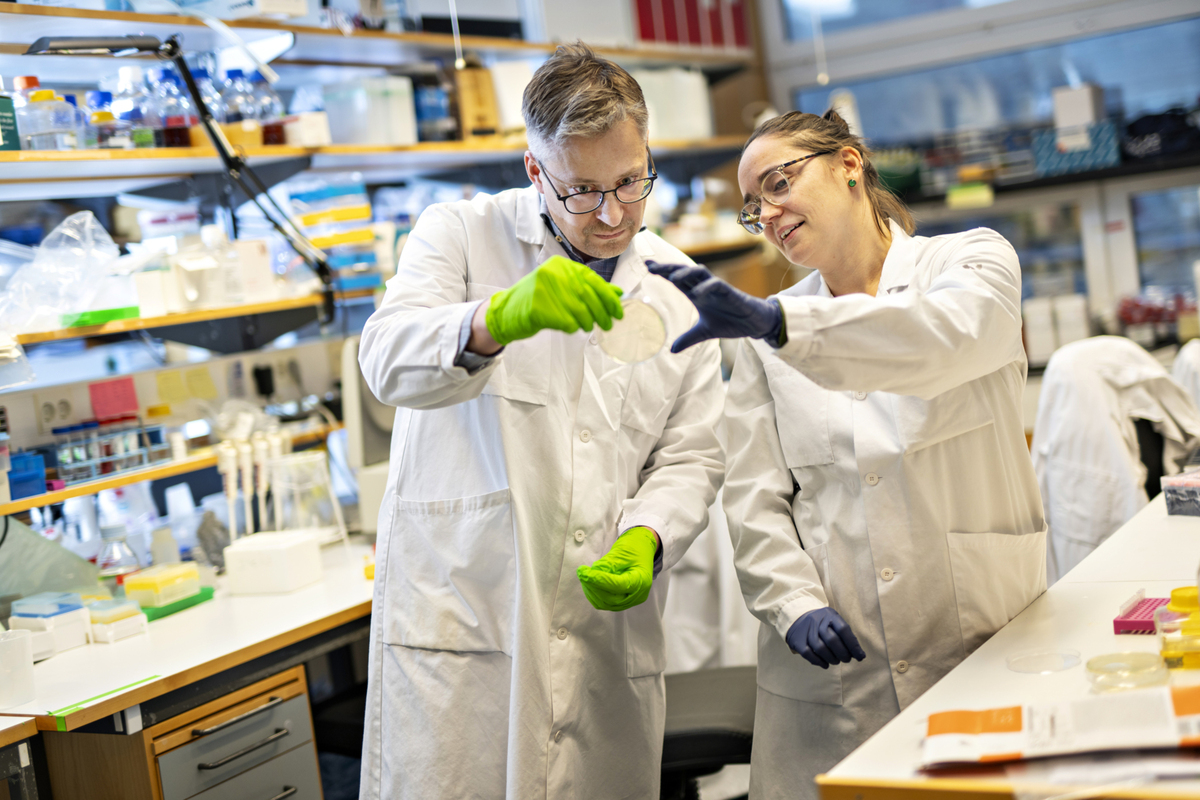
Molecular microbiology is a field of science that focuses on understanding how microorganisms such as bacteria and their viruses function at a molecular level. Biofilms, the most common way bacteria grow in nature, are complex 3D communities. They can consist of one or more bacterial strains, all enclosed in a protective, self-produced extracellular matrix. The research project aims to understand how bacteria form biofilms and how these structures increase their resistance to adverse environmental conditions. In natural ecosystems, adaptation to stress is crucial for survival. Therefore, this project aims to map the molecular mechanisms behind biofilm formation and develop new methods to study them. The research will use both model systems and bacteria relevant to medicine and biotechnology.
Work duties
The main duties of doctoral students are to devote themselves to their research studies, which includes participating in research projects and third cycle courses. The work duties can also include teaching and other departmental duties (no more than 20%). The doctoral student will also have opportunities to collaborate with international groups and is expected to supervise master and/or bachelor students.
Admission requirements
A person meets the general admission requirements for third-cycle courses and study programmes if the applicant:
- has been awarded a second-cycle qualification, or
- has satisfied the requirements for courses comprising at least 240 credits of which at least 60 credits were awarded in the second cycle, or
- has acquired substantially equivalent knowledge in some other way in Sweden or abroad.
A person meets the specific admission requirements for third cycle studies in Biology if the applicant has passed an independent project (for example a degree project) of at least 30 credits in a relevant subject and has good oral and written proficiency in English.
Additional requirements:
- Very good oral and written proficiency in English.
- Master's degree in molecular biology or biochemistry with elements of microbiology.
- Driven by a strong ambition to conduct high-quality and innovative research.
- Ability to work independently combined with good collaboration skills and a willingness to interact with other researchers.
- Solid practical experience of microscopic techniques (phase and fluorescence microscopy) as well as molecular and biochemical methods such as PCR, cloning and transformation.
- Basic knowledge of using bioinformatics tools for sequence analysis and database management.
Assessment criteria
Selection for third-cycle studies is based on the student’s potential to profit from such studies. The assessment of potential is made primarily on the basis of academic results from the first and second cycles. Special attention is paid to the following:
- Knowledge and skills relevant to the thesis project and the subject of study.
- An assessment of the ability to work independently and to formulate and tackle research problems.
- Written and oral communication skills.
- Other experience relevant to the third cycle studies, for example professional experience.
Other assessment criteria:
- Programming skills (e.g. Python, R)
- Experience working with Gram-positive bacteria
Consideration will also be given to good collaborative skills, drive and independence, and how the applicant, through his or her experience and skills, is deemed to have the abilities necessary for successfully completing the third cycle programme.
Terms of employment
Only those admitted to third cycle studies may be appointed to a doctoral studentship. Third cycle studies consist of full-time studies for 4 years. A doctoral studentship is a fixed-term employment of a maximum of 5 years (including 20% departmental duties). Doctoral studentships are regulated in the Higher Education Ordinance (1993:100), chapter 5, 1–7 §§.
Instructions on how to apply
Applications shall be written in English and include a cover letter stating the reasons why you are interested in the position and in what way the research project corresponds to your interests and educational background. The application must also contain a CV, degree certificate or equivalent, a copy of the master’s thesis, and other documents you wish to be considered (grade transcripts, contact information for your references, letters of recommendation, etcetera).
| Type of employment | Temporary position |
|---|---|
| First day of employment | November 1st 2025 or as soon as possible, by agreement |
| Salary | Monthly salary |
| Number of positions | 1 |
| Full-time equivalent | 100 |
| City | Lund |
| County | Skåne län |
| Country | Sweden |
| Reference number | PA2025/2420 |
| Contact |
|
| Union representative |
|
| Published | 27.Aug.2025 |
| Last application date | 21.Sep.2025 |