
Doctoral student in synthesis and characterization of novel perovskite quantum materials for light-converting applications - Hiring in process/Finished, not possible to apply
This advert is not available!
Lund University
Lund University was founded in 1666 and is repeatedly ranked among the world’s top universities. The University has around 47 000 students and more than 8 800 staff based in Lund, Helsingborg and Malmö. We are united in our efforts to understand, explain and improve our world and the human condition.
Lund University welcomes applicants with diverse backgrounds and experiences. We regard gender equality and diversity as a strength and an asset.
Description of the workplace
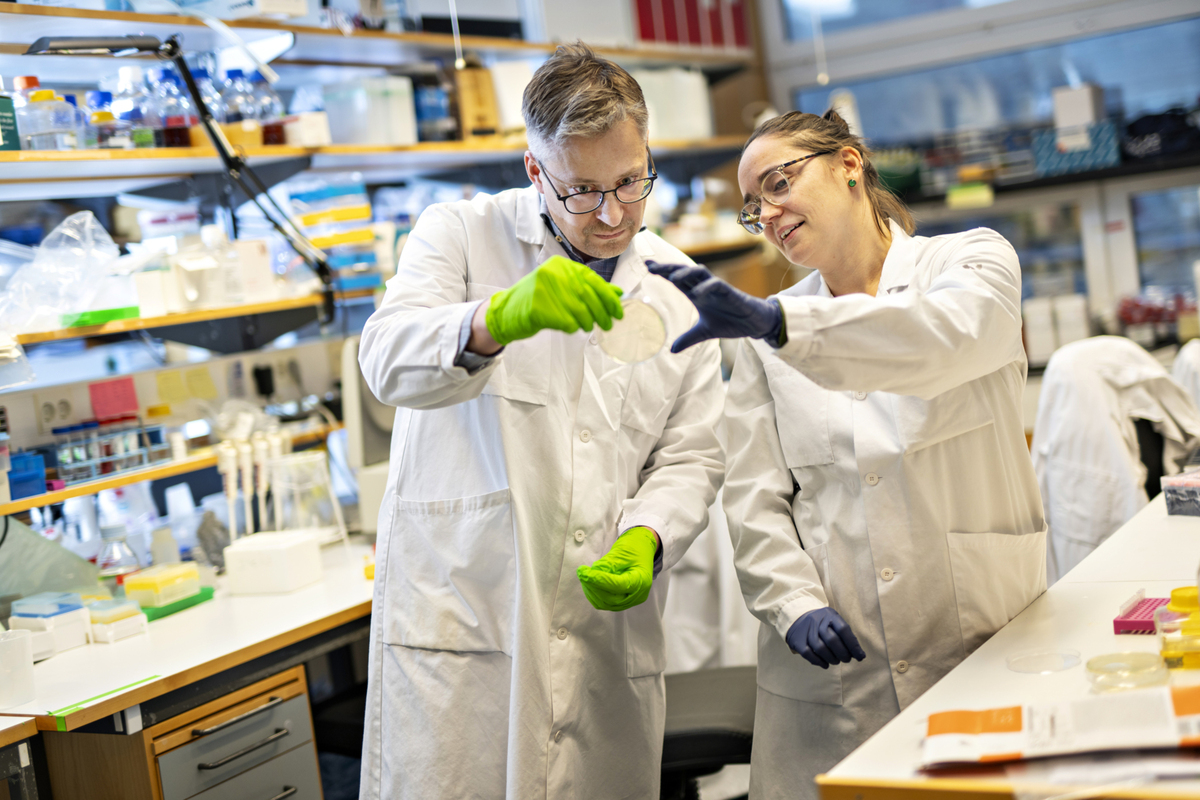
This position will be part of the Light-Activated Energy Materials (LAEM) Group led by Assistant Professor Maning Liu within the Centre for Analysis and Synthesis (CAS) at the Department of Chemistry. We are a highly international unit and strive to maintain gender balance. Research at CAS (with more than 120 employees from >20 countries) focuses on inorganic, organic, polymer and advanced materials synthesis, as well as advanced analysis and characterization techniques, with applications across such topics as solar cells, solar fuels, energy storage and light-related matters.
Being a doctoral student
As a doctoral student, you are both admitted as a student and employed at Lund University. As a doctoral student, you will be trained in a scientific approach. In short, you will be trained to think critically and analytically, to solve problems independently using the right methods, and to develop an awareness of research ethics. In addition, you will have the opportunity to work on projects, to develop your leadership and pedagogical skills. Throughout your studies, you will be guided by supervisors. Doctoral studies end with a thesis and a doctoral degree.
More about being a doctoral student at LTH on lth.se. https://www.lth.se/english/study-at-lth/phd-studies/
Subject and project description
The focus of the research will be on the design, synthesis and characterization of novel 2D lead-free perovskite quantum materials, e.g., multi-quantum wells, for their light-converting applications such as solar cells (including indoor photovoltaics) or light-emitting diodes (LEDs). Metal halide perovskites have been recognized as the most promising candidate for a wide range of potential uses in solar energy applications such as solar cells and photocatalysis. To be able to meet the rising challenges in eco-friendly and sustainable production of materials for these applications, novel lead-free halide perovskites, particularly in the quantum-size form, must be explored. For this reason, we are aiming to develop synthesis and deepen understanding of 2D lead-free perovskite quantum materials with potential for the fabrication of efficient and stable optoelectronics.
The project will also be part of the granted VR (Swedish Research Council) project (2026-2029), which will include collaboration with partners within the VR network.
Work duties
You will primarily devote yourself to your doctoral programme, which includes participation in research projects as well as third cycle courses, seminars and conferences.
The work duties include:
- Designing, planning and carrying out experiments under the supervision of your doctoral supervisor(s), including the development of project ideas.
- Write and publish the manuscripts based on the project outcomes in relatively high-quality journals in the field.
- The duties also include participation in teaching and other departmental work (however, a maximum of 20% of working hours).
Qualifications
To be eligible for admission and employment as a doctoral student, you must fulfil the requirements below.
Admission requirements
A person meets the general admission requirements for third-cycle courses and study programmes if the applicant:
- has been awarded a second-cycle qualification, or
- has satisfied the requirements for courses comprising at least 240 credits of which at least 60 credits were awarded in the second cycle, or
- has acquired substantially equivalent knowledge in some other way in Sweden or abroad.
A person meets the specific admission requirements for third cycle studies in Materials Chemistry if the applicant has:
- At least 30 credits of relevance to the subject area, of which at least 15 credits from the second cycle and a specialized project of at least 15 second-cycle credits in the subject, or
- An MSc in Chemical Engineering or Engineering Nanoscience
Additional requirements
In order to complete the doctoral programme in question, the following are also required:
- knowledge and skills relevant to the thesis project and the subject of study.
- other experience relevant to the third-cycle studies, e.g. professional experience.
- good ability to work independently and to formulate and tackle research problems.
- good written and oral communication skills
- very good knowledge of English, spoken and written
- for candidates with non-English Master degree (or equivalent certificate), a certificate of qualified English test should be provided such as IELTS and/or TOFEL.
Other qualifications
For the doctoral programme in question, the following are considered as other qualifications:
- experience in fabrication of next generation optoelectronics such as (perovskite) solar cells and/or LEDs.
- experience in synthesis and fabrication of semiconductor thin films via solution process (e.g., spin-coating) and/or vapor method (e.g., chemical vapor deposition).
- materials characterization skills such as X-ray diffraction (XRD), UV-visible absorption spectroscopy, scanning electron microscope (SEM), photoluminescence (emission) spectroscopy etc.
- knowledge in photophysics.
We offer
Lund University is a public authority which means that employees get particular benefits, generous annual leave and an advantageous occupational pension scheme.
More about working at Lund University on lu.se. https://www.lunduniversity.lu.se/about-university/work-lund-university
About the employment
The employment is a fixed-term employment at full time, starting as agreed. Third cycle studies at LTH consist of full-time studies for 4 years. In the case of teaching and other departmental duties, the employment is extended accordingly. Doctoral studentships are regulated in the Higher Education Ordinance (1993:100), chapter 5, 1-7 §§.
More about terms of employment for doctoral students on Lund University’s Staffpages. https://www.staff.lu.se/research-and-education/research-support/doctoral-education/terms-employment-doctoral-students
How to apply
Applications shall be written in English and include:
- CV and a cover letter stating the reasons why you are interested in the doctoral programme/employment and in what way the research project corresponds to your interests and educational background.
- Copies of issued study certificates and/or awarded degree certificates. These must confirm that you meet the general and specific admission requirements for the doctoral programme and show that you have the subject knowledge required for the doctoral programme project.
- Other documents you wish to be considered (grade transcripts, contact information for your references, letters of recommendation, etc.)
We welcome your application.
| Type of employment | Temporary position |
|---|---|
| First day of employment | As agreed |
| Salary | Monthly salary |
| Number of positions | 1 |
| Full-time equivalent | 100 |
| City | Lund |
| County | Skåne län |
| Country | Sweden |
| Reference number | PA2025/3653 |
| Contact |
|
| Union representative |
|
| Published | 15.Dec.2025 |
| Last application date | 12.Jan.2026 |