
Doctoral students in immunotechnology
Lund University
Lund University was founded in 1666 and is repeatedly ranked among the world’s top universities. The University has around 47 000 students and more than 8 800 staff based in Lund, Helsingborg and Malmö. We are united in our efforts to understand, explain and improve our world and the human condition.
Lund University welcomes applicants with diverse backgrounds and experiences. We regard gender equality and diversity as a strength and an asset.
Description of the workplace
The Department of Immunotechnology conducts research ranging from advanced technology development to biomedical studies. The main research areas include immuno-oncology, sensitization, and biomarkers. The modern facilities are located at Medicon Village, where academic research is carried out side by side with private companies and actors from the healthcare sector. Several key infrastructure facilities are available, including specialized laboratories for spatial omics, mass spectrometry, flow cytometry, and antibody production, as well as NBIS (National Bioinformatics Infrastructure Sweden). The department hosts a unit within Display and Selection Technologies, which is part of the national research platform SciLifeLab Drug Discovery and Development. The department is also responsible for several student courses and offers high-quality education at both undergraduate and advanced levels. Approximately 45 people work within the department.
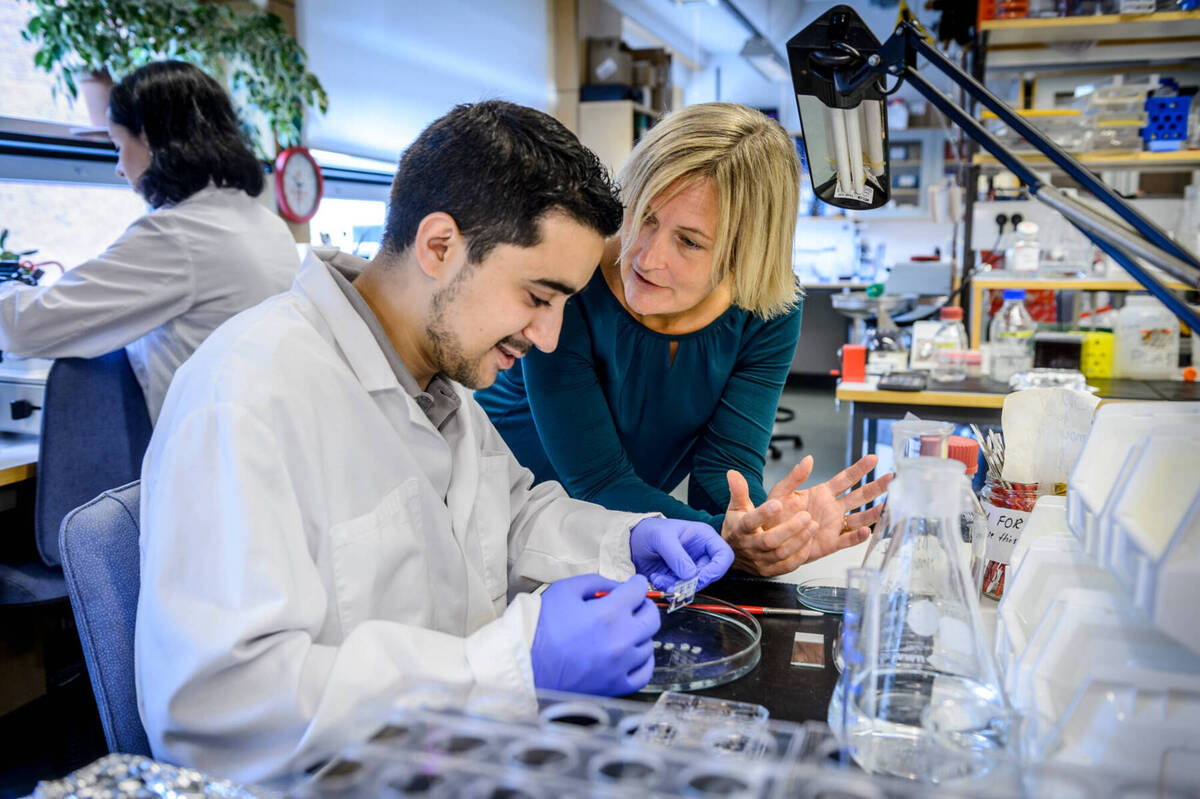
You will be part of a research group in immuno-oncology that focuses on immune cells and their regulation within the tumor microenvironment, the development of new immunotherapeutic treatments and of human models for preclinical drug evaluation and mechanistic studies.
Being a doctoral student
As a doctoral student, you are both admitted as a student and employed at Lund University.
As a doctoral student, you will be trained in a scientific approach. In short, you will be trained to think critically and analytically, to solve problems independently using the right methods, and to develop an awareness of research ethics. In addition, you will have the opportunity to work on projects, to develop your leadership and pedagogical skills. Throughout your studies, you will be guided by supervisors. Doctoral studies end with a thesis and a doctoral degree.
More about being a doctoral student at LTH on lth.se. https://www.lth.se/english/study-at-lth/phd-studies/
Subject and project description
The position’s research focus is within the field of immune oncology with specific focus on T-cells and myeloid cells. The candidate will be actively engaged in research projects aiming to understand the heterogeneity of immune-infiltration and regulation of immune cells in solid tumors as well as the development of immune-targeted therapies. We apply advanced technologies, including single-cell RNA sequencing, spatial omics, and spectral flow cytometry, to characterize immune cells in solid tumors. The PhD projects include work with clinical samples such as fresh tumor biopsies, peripheral blood and paraffin embedded clinical samples. It will include ex vivo functional analyses of the immune cell populations/tumor tissues. Furthermore, the doctoral research studies will involve development and evaluation of novel treatment strategies and application of computational approaches to analyse omics data. Our experimental and translational studies are carried out in close collaboration with clinical specialists at Skåne University Hospital.
Work duties
You will primarily devote yourself to your doctoral programme, which includes participation in research projects as well as third cycle courses, seminars and conferences. The work duties will also include teaching and other departmental duties (no more than 20%).
The candidate will participate in different research projects with duties such as generating transcriptomic (incl. single cell sequencing), spatial and proteomic data from clinical samples to assess biomarker profiles before and after standard treatment and immunotherapy. Bioinformatic analysis of such data will thus be a core activity in the doctoral program. Furthermore, performing flow cytometry analyses and cell sorting will be central and also immunological assays will be used to study the functional properties of tumor-infiltrating immune cell populations and their status upon stimulation with therapeutic antibodies. Model systems such as ex vivo culture of tissue slices will be used in the research projects to study mechanisms and treatment effects (e.g., of antibodies).
Qualifications
To be eligible for admission and employment as a doctoral student, you must fulfil the requirements below.
Admission requirements
A person meets the general admission requirements for third-cycle courses and study programmes if the applicant:
- has been awarded a second-cycle qualification, or
- has satisfied the requirements for courses comprising at least 240 credits of which at least 60 credits were awarded in the second cycle, or
- has acquired substantially equivalent knowledge in some other way in Sweden or abroad.
A person meets the specific admission requirements for third cycle studies in Immunotechnology if the applicant has:
- at least 240 credits of relevance to the subject area, of which at least 60 credits from the second cycle and a specialised project of at least 30 second-cycle credits of relevance to the subject, or
- a Master in Engineering or another relevant degree at the same level
Finally, the student must be judged to have the potential to complete the programme.
Additional requirements
In order to complete the doctoral programme in question, the following are also required:
- Knowledge and skills relevant to the thesis project and the subject of study.
- Very good oral and written proficiency in English.
- To have completed an independent research project (such as an MSc thesis project or similar assignment) within the field of immunology, immunotechnology, and/or bioinformatics.
- Excellent communication skills
- Good analytical skills
- Good collaborative skills
- Good ability to work independently and to formulate and tackle research problems.
Other assessment criteria
For the doctoral programme in question, the following are considered as other qualifications:
- Education/knowledge and experimental experience in immuno-oncology
- Practical experience of bioinformatics and programming (e.g. in Python and/or R)
- Practical experience of multiplex flow cytometry and cell sorting
- Practical experience of working with primary immune cells as well as of immunological assays to assess e.g. T cell and myeloid cell activation.
- Practical experience with ex vivo tissue‑based culture (e.g., tissue slices or fragments).
- Practical experience of complex tissue analysis using multistaining techniques and image analysis.
- Practical experience of analysis of spatial proteomics and/or transcriptomics data.
- Experience of designing antibody-based strategies for cancer treatment, and evaluation of such strategies in cellular systems.
Consideration will also be given to good collaborative skills, drive and independence, and how the applicant, through experience and skills, is deemed to have the abilities necessary for successfully completing the third cycle programme.
We offer
Lund University is a public authority which means that employees get particular benefits, generous annual leave and an advantageous occupational pension scheme
About the employment
The employment is a fixed-term employment at full time, starting as agreed. Limit of tenure, four years according to HF 5 kap 7§
Third cycle studies at LTH consist of full-time studies for 4 years. In the case of teaching and other departmental duties, the employment is extended accordingly. Doctoral studentships are regulated in the Higher Education Ordinance (1993:100), chapter 5, 1-7 §§.
More about terms of employment for doctoral students on Lund University’s Staffpages. https://www.staff.lu.se/research-and-education/research-support/doctoral-education/terms-employment-doctoral-students
Other
We intend to offer employment for 1-2 PhD students.
How to apply
Applications shall be written in English and include:
- CV and a cover letter stating the reasons why you are interested in the doctoral programme/employment and in what way the research project corresponds to your interests and educational background.
- Copies of issued study certificates and/or awarded degree certificates. These must confirm that you meet the general and specific admission requirements for the doctoral programme and show that you have the subject knowledge required for the doctoral programme project.
- Other documents you wish to be considered (grade transcripts, contact information for your references, letters of recommendation, etc.)
We welcome your application.
| Type of employment | Temporary position |
|---|---|
| First day of employment | As agreed |
| Salary | Monthly salary |
| Number of positions | 1 |
| Full-time equivalent | 100 |
| City | Lund |
| County | Skåne län |
| Country | Sweden |
| Reference number | PA2026/348 |
| Contact |
|
| Union representative |
|
| Published | 06.Feb.2026 |
| Last application date | 06.Mar.2026 |