
Project assistant
Lund University
Lund University was founded in 1666 and is repeatedly ranked among the world’s top universities. The University has around 47 000 students and more than 8 800 staff based in Lund, Helsingborg and Malmö. We are united in our efforts to understand, explain and improve our world and the human condition.
Lund University welcomes applicants with diverse backgrounds and experiences. We regard gender equality and diversity as a strength and an asset.
Description of the workplace
The Department of Immunotechnology at Lund University conducts cutting-edge research within the Life Sciences, with a strong focus on immuno-oncology, biomarkers and allergy-related conditions. We are based at Medicon Village, a dynamic hub for academic research, biotech companies, and healthcare organizations, and our department benefits from a collaborative and innovation-driven environment.
A wide array of state-of-the-art infrastructures are available at the Department, including platforms for multiplex flow cytometry and cell sorting, antibody development, spatial omics, mass spectrometry, as well as bioinformatical expertise from NBIS (National Bioinformatics Infrastructure Sweden). By leveraging advanced technologies to tackle complex questions in biomedicine, our department has become a leader in several key research fields and has fostered the creation of multiple successful spin-off ventures, many of which are also based at Medicon Village.
We offer
Lund University is a public authority which means that employees get particular benefits, generous annual leave and an advantageous occupational pension scheme.
Read more on the University website about being a Lund University employee Work at Lund University.
Work duties and areas of responsibility
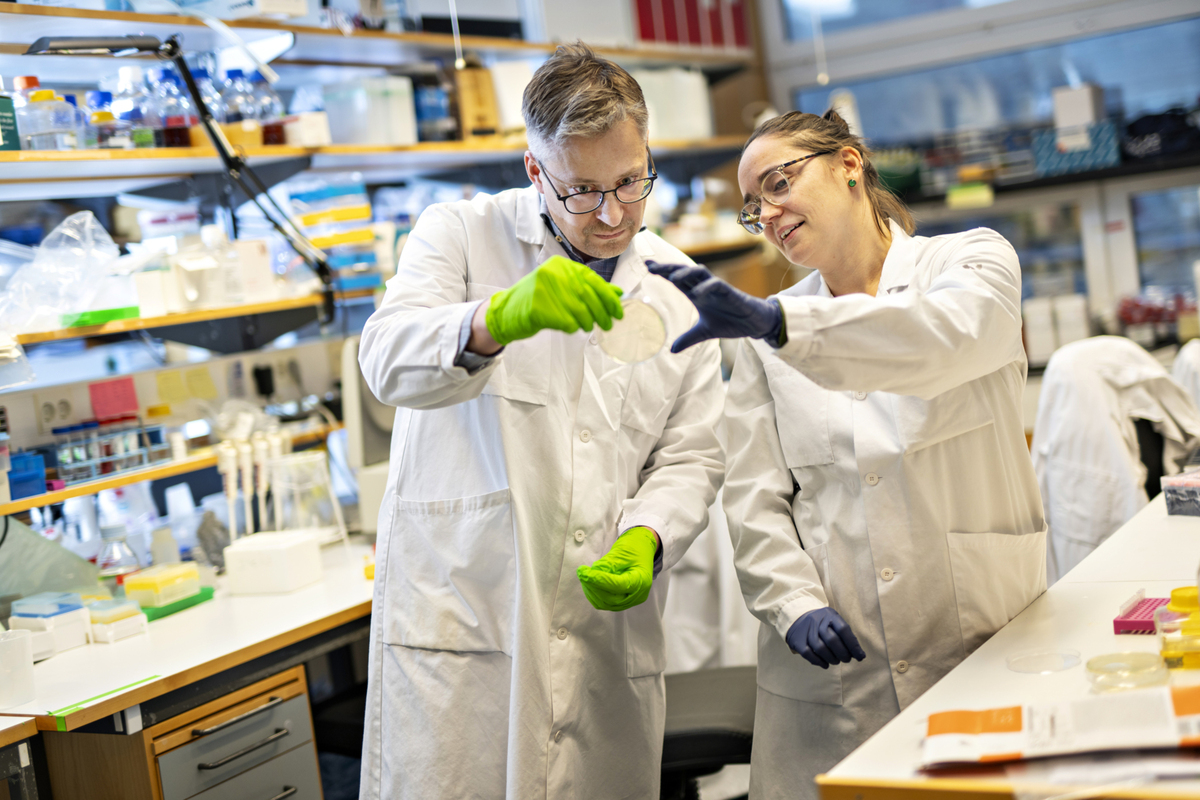
The position is within a research group focusing on immune cells in cancer. We perform translational research with the ultimate goal to develop more effective treatment strategies based on immune cell modulation. By characterizing the immune microenvironment within tumors, we aim to uncover key immune regulatory mechanisms that can be further explored in human-based model systems.
The research projects involve a variety of in vitro assays and advanced explant‑based model systems, and the project assistant will take an active part in the experimental work with these. The tasks may include, for example, handling and culturing primary human cells and tissues under different conditions.
A range of experimental readouts will be employed, including e.g. deep phenotyping via flow cytometry, high-plex analysis of soluble factors, spatial characterization of tissue sections using immunofluorescence, and related data analysis. In addition, the role will involve summarizing and interpreting the experimental data.
Qualifications
Requirements for employment are:
- Master’s education in biotechnology, cell biology, molecular biology or equivalent
- Knowledge in immunology and having completed an independent research project (such as a master’s thesis or an equivalent assignment) in an area such as immunology/immuno-oncology/immunotechnology or similar.
- Practical experience of working with primary cells.
- Very good oral and written proficiency in English.
- Excellent collaboration and communication skills
Additional qualifications for the position are:
- Practical experience working with immune cells, including for example isolation of immune cells from blood/tissue
- Practical experience in cell culture
- Practical experience with analytical methods such as multiplex flow cytometry and multiplex analysis of soluble factors (for example using the Luminex system), as well as associated data analysis
- Practical experience working with human tissue, e.g. isolation of cells from tissue and/or tissue culture
- Experience in analyzing patient data and knowledge in biostatistics
Personal qualities, such as commitment, scientific interest, precision, good communication and cooperation skills, are of particular importance.
Further information
This is a special fixed-term position (SÄVA) of 6 months, 100 % of full time. Starting date 1 April 2026 or according to agreement.
Instructions for the application
Applications should be written in English and include a cover letter explaining why you are interested in the position and how your qualifications match the position. The application should also include a CV, educational qualifications or equivalent and any other information you wish to provide (copies of certificates, details of references, letters of recommendation, etc.)
| Type of employment | Special fixed-term employment |
|---|---|
| Contract type | Full time |
| First day of employment | 1 April or as agreed, but no later than 1 June 2026 |
| Salary | Månadslön |
| Number of positions | 1 |
| Full-time equivalent | 100 |
| City | Lund |
| County | Skåne län |
| Country | Sweden |
| Reference number | PA2026/420 |
| Contact |
|
| Union representative |
|
| Published | 19.Feb.2026 |
| Last application date | 06.Mar.2026 |