
Assistant Researcher to the unit Islet Cell Exocytosis
Faculty of Medicine, Department of Clinical Science, Malmo
Lund University was founded in 1666 and is repeatedly ranked among the world’s top universities. The University has around 47 000 students and more than 8 800 staff based in Lund, Helsingborg and Malmö. We are united in our efforts to understand, explain and improve our world and the human condition.
Lund University welcomes applicants with diverse backgrounds and experiences. We regard gender equality and diversity as a strength and an asset.
The research group Islet Cell Exocytosis conducts research in the field of diabetes. For several years, the group has been at the forefront of research on microRNA and islet cell physiology. The group is led by Professor Lena Eliasson and consists of research and technical staff. The activities are located at the Department of Clinical Sciences in Malmö. The research group is part of the Lund University Diabetes Centre (LUDC). More information about our research can be found here and here.
Within the research group, we place great value on a good working environment characterised by respect and care in our interactions with one another, and we strive to provide a workplace that is perceived as stimulating and conducive to development for all employees. We continuously work to create conditions that promote job satisfaction, development, and participation for all staff. We are committed to ensuring both physical safety and a healthy psychosocial work environment.
What We Offer
Lund University is a public authority, which means that you are entitled to special benefits, generous annual leave, and a favorable occupational pension. We also have a flextime agreement, which contributes to good conditions for a healthy work–life balance.
Read more on the University’s website about being employed at Lund University: Work with us
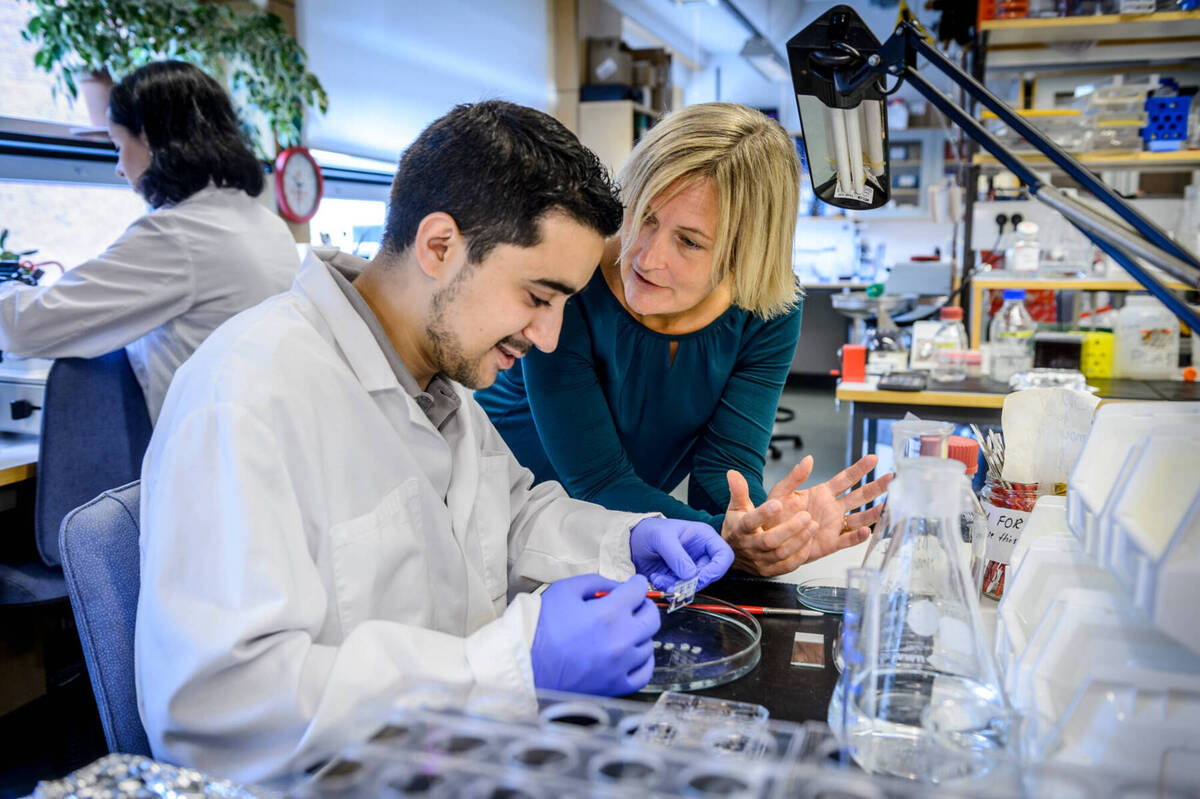
Work duties and areas of responsibilityIn the role of Assistant Researcher, you will work with cell culture and transfection of cells (primarily MIN6, INS1‑832/13, EndoC‑βH1), perform exosome isolation and characterisation using transmission electron microscopy (TEM), conduct in vitro glucose‑stimulated insulin secretion assays, qPCR and Western blot analyses, and use confocal microscopy to measure intracellular signalling molecules such as Ca²⁺ and ATP as well as to study exosome uptake. The duties also include work with animal models, including pharmacological injection and in vivo metabolic phenotyping such as IPGTT (intraperitoneal glucose tolerance test) and blood glucose measurements. Additional tasks involve writing research grant applications, analysing experimental results, summarising research findings in scientific articles, and presenting data at conferences and during internal presentation sessions.
Qualifications
The following qualifications are required:
- A doctoral degree in science and health.
- More than three years of experience in diabetes research with a focus on the pancreas.
- Previous experience in research on pancreatic islet cells.
- Experience working with exosomes/extracellular vesicles.
- Great emphasis will be placed on personal qualities. We are looking for someone who is meticulous, driven, and has strong collaborative skills.
The following qualifications are considered an asset:
- Experience with various molecular biology and protein biology techniques such as qPCR and Western blot.
- Experience with imaging techniques such as confocal microscopy and electron microscopy.
- Experience with in vivo measurements, e.g., glucose tolerance tests and blood glucose measurements.
- Experience with data analysis tools for experimental data.
- Experience with cell culture.
- Good command of English.
Other information
The position is a special fixed‑term employment (SÄVA) from 10 August 2026 until 9 August 2027. The position is full‑time (100%).
How to Apply
Applications are submitted through the University’s recruitment system. The application must include a personal letter describing how you meet the qualification requirements and why you are interested in the position. The application must also include a CV, a copy of your doctoral degree certificate, and any other documents you wish to cite in support of your application (copies of diplomas, transcripts, references, letters of recommendation, etc.).
| Type of employment | Special fixed-term employment |
|---|---|
| Contract type | Full time |
| First day of employment | 2026-08-10 |
| Salary | Månadslön |
| Number of positions | 1 |
| Full-time equivalent | 100 |
| City | Malmö |
| County | Skåne län |
| Country | Sweden |
| Reference number | PA2026/623 |
| Contact |
|
| Union representative |
|
| Published | 24.Feb.2026 |
| Last application date | 11.Mar.2026 |